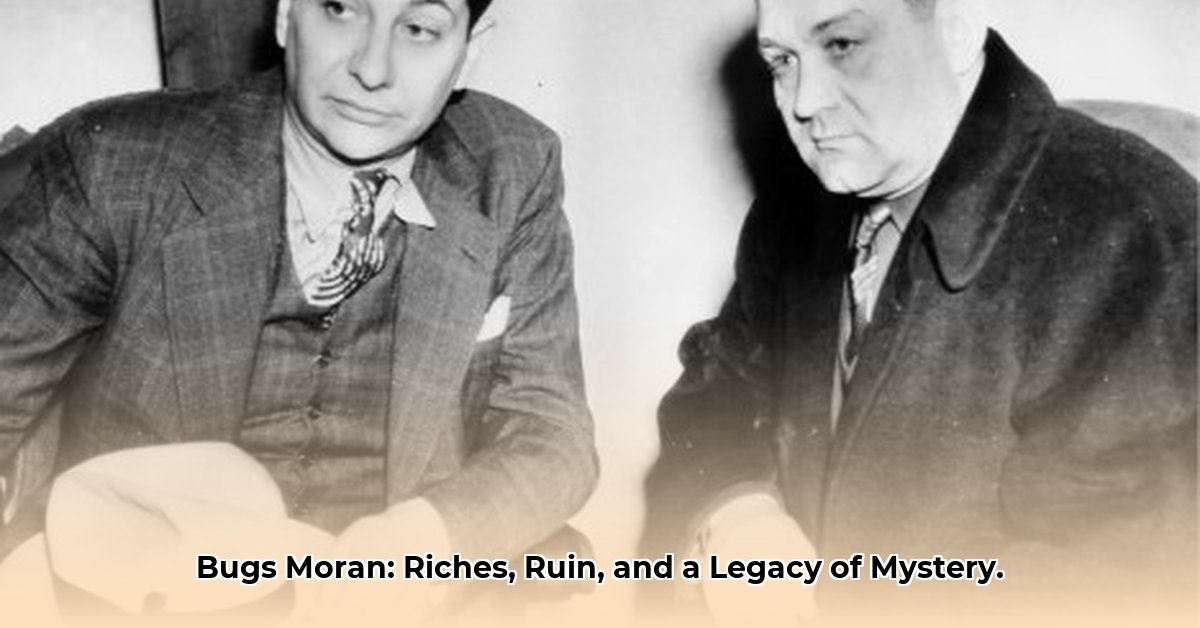
Bugs Moran Net Worth: A Chicago Legend's Dubious Fortune
George "Bugs" Moran. The name conjures images of Chicago's roaring twenties: hidden speakeasies, illicit deals, and the chilling echo of machine-gun fire. A major player in the era's underworld, his wealth during Prohibition is a subject of enduring fascination and considerable uncertainty. This article delves into Moran's life, from his early days in the bootlegging business to the devastating St. Valentine's Day Massacre and beyond, to unravel the complexities of his finances. We will explore the available evidence, separating fact from speculation, to paint a clearer picture of his rise, fall, and ultimate legacy.
Was Bugs Moran a bootlegging billionaire? While some estimates place his annual earnings in the tens of millions of dollars (in today's money), verifying such figures is nearly impossible. The nature of his business – operating outside the law – means comprehensive financial records simply didn't exist. How can we even begin to estimate a figure? Researchers must rely on indirect evidence, such as estimates of overall market size and the success of similar criminal enterprises, to provide a reasonable approximation. This makes determining a precise net worth a significant challenge.
The Bootlegging Billionaire? A Closer Look
Moran's primary source of wealth was bootlegging. During the Prohibition era, the illegal manufacture and sale of alcohol generated immense profits, and Moran controlled a substantial portion of Chicago's lucrative market. But how much was his share? This question remains elusive due to the clandestine nature of his operations. The lack of official records leaves historians and researchers to rely on educated estimations. One might ask: how reliable are these estimations, given the circumstances? They are necessarily imprecise, offering a broad range rather than a definitive sum.
The St. Valentine's Day Massacre: A Financial Earthquake
The infamous St. Valentine's Day Massacre of 1929 served as a pivotal turning point in both Moran's criminal career and his financial standing. While he miraculously survived, the attack decimated his organization, crippling his operational capacity and significantly impacting his earnings. The massacre's effect on his net worth was immediate and profound. The disruption of his supply chains and the loss of key personnel resulted in a sharp decline in his profits. Did the Massacre wipe out all his money? Unlikely, but it undoubtedly dealt a devastating blow to his empire and reduced his financial power considerably.
Untangling the Threads: Estimating Bugs Moran's Wealth
Determining Bugs Moran's peak net worth is a complex endeavor, hampered by a significant lack of evidence. The absence of financial records forces reliance on indirect measures, such as comparing his estimated share of the illegal alcohol market to those of rival gangsters. While some researchers propose figures in the millions, others caution against drawing definitive conclusions. Even these estimates, however, are bound by inherent limitations, making a precise calculation highly improbable. Furthermore, Moran's lifestyle didn't reflect ostentatious displays of wealth; his investment strategies focused primarily on reinvesting profits to expand his operation rather than personal extravagance.
From Gangster to Prison: The Final Act
Following the Massacre, Moran’s influence waned. Although he persisted in criminal activities, they were on a much smaller scale. The once-vast resources accumulated during Prohibition dwindled, eventually leading to his imprisonment. This downward spiral contrasts sharply with the romanticized image often associated with gangsters in popular culture. The stark reality serves as a cautionary tale about the instability inherent in illegally obtained wealth.
How did Bugs Moran's finances decline after the St. Valentine's Day Massacre?
The St. Valentine's Day Massacre profoundly impacted Moran’s financial standing, triggering a significant decline for several key reasons:
- Loss of manpower and organizational structure: The massacre eliminated key members of Moran's gang, disrupting operations and weakening his control over the bootlegging market.
- Damage to reputation and alliances: The massacre damaged his reputation within the criminal underworld, impacting trust and making it harder to maintain alliances and illicit partnerships.
- Increased vulnerability: The diminished size and power of his gang made Moran increasingly vulnerable to attacks from rivals such as Al Capone, leading to a further reduction in his income.
- Shifting power dynamics: Following the massacre, other gangs capitalized on the power vacuum, seizing control of Moran's markets and diminishing his income streams.
- The end of Prohibition: The repeal of Prohibition dealt a final blow to his main income source, leaving Moran struggling to adapt to the changing legal landscape.
Moran's story stands as a stark example of the precariousness of wealth built on a foundation of crime. His life journey, from a powerful bootlegger to a relatively impoverished convict, offers a valuable perspective on the volatile world of organized crime during the Prohibition era. While the precise amount of his accumulated wealth remains elusive, the narrative itself underscores the complexities of assessing the financial realities of individuals operating outside the confines of the law.